The Importance of Picture Books
In a world where technology has taken over our lives, the importance of picture books and the role they play, is still relevant.
One of my saddest moments was being informed I was too old to read picture books. One of the happiest, was discovering there was a three-year course called ‘Children’s Literature’ on my first day at teacher’s college. It’s a sad world that we live in, when children are pushed to leave the world of picture books behind them, to instead become immersed in chapter books.
Our first introduction to language and understanding of words is by seeing the world through our eyes and listening to the spoken word. If you watch toddlers, they are highly observant and absorb new information visually.
As we grow, we find our language skills become more complex and we learn to make inferences. Sadly, it is at this time that we begin losing both our inquisitiveness and observation skills.
To be honest, when entering a store, it’s the picture books that call to me first: their colours, the imagery and the magic they hold within. Picture books are for everyone, no matter our age. Each time we return to an old favourite, we see something new, and even more important, it helps us revisit that inner child within us.
These books don’t just teach children to read and understand language, they help them develop imagination and an understanding of art.
Story Telling
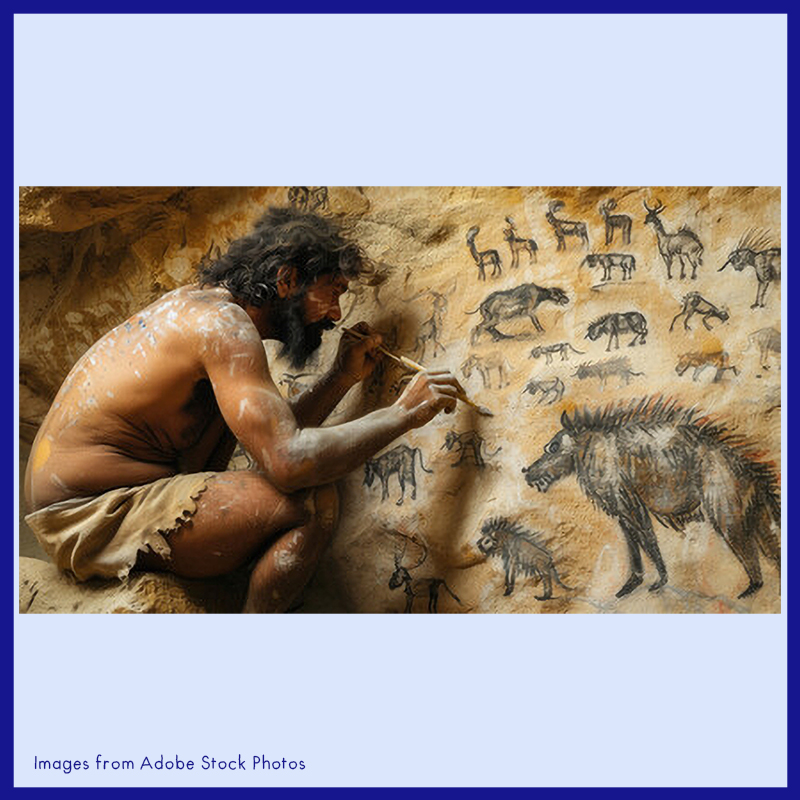
From mankind’s earliest history, the art of storytelling has been embedded within us.
The Short History of Books
First vocalised millennia ago, stories were later drawn upon cave walls when the first artist picked discovered they could draw. These stories generally related events that had taken place; in reality, the first written histories.
Books came later, but were written for adults, not children. It wasn’t until the 1600s that children’s books were first written and printed. In the early days, they were a way of educating the young on social mores, or for teaching lessons. A century later, the young read mostly books written for adults – mostly adventure stories like Robinson Crusoe and Gulliver’s Travels.
The 1800s saw children’s books become a genre of their own. This was a time when authors began creating stories that were interesting and imaginative. These were also the years when the Brothers Grimm recorded their collection of folk tales, which became the beloved fairy tales of my generation.
It’s only within the past century or so, however, that picture books burst onto the scene.
As a child, I loved reading the likes of Grimm’s Fairy Tales, Pollyanna, Heidi and Anne of Green Gables, but their preaching undertones didn’t hold me like books that came later. It was Dr Seuss’ Cat in the Hat, and the Berenstain Bear series that held me riveted during my years of early reading experiences and the adventure stories like The Adventurous Four by Enid Blyton, and Arthur Ransome’s Swallows and Amazons that truly captured my adventurous heart. The picture books held me in fits of laughter, whilst the latter set my imagination soaring.
As a child and teacher, right through to the early 2000s, I found picture books were fun. Writers had moved away from the moralistic teachings so prevalent during the early years. It was quite a shock to discover multitudes of authors had reverted to the original norm as a way of teaching socialisation when I entered the writing world some twelve years later.
Picture Books
That aside, books for the young today have become more than a picture book. They are the perfect medium for storytelling.
Picture books may appear simple, but they are actually rather sophisticated, and considered one of the most difficult arts of storytelling. Since I commenced writing in 2020, word count expectations on authors by traditional publishers have gone from 700 to 500, and the word is out that a few are now aiming for 150.
I just love the way the words and illustrations work together to create the story. One of the things I enjoy most about writing picture books is the journey I have creating each book with an aim to include surprises within the illustrations, which in turn deepens the plot.